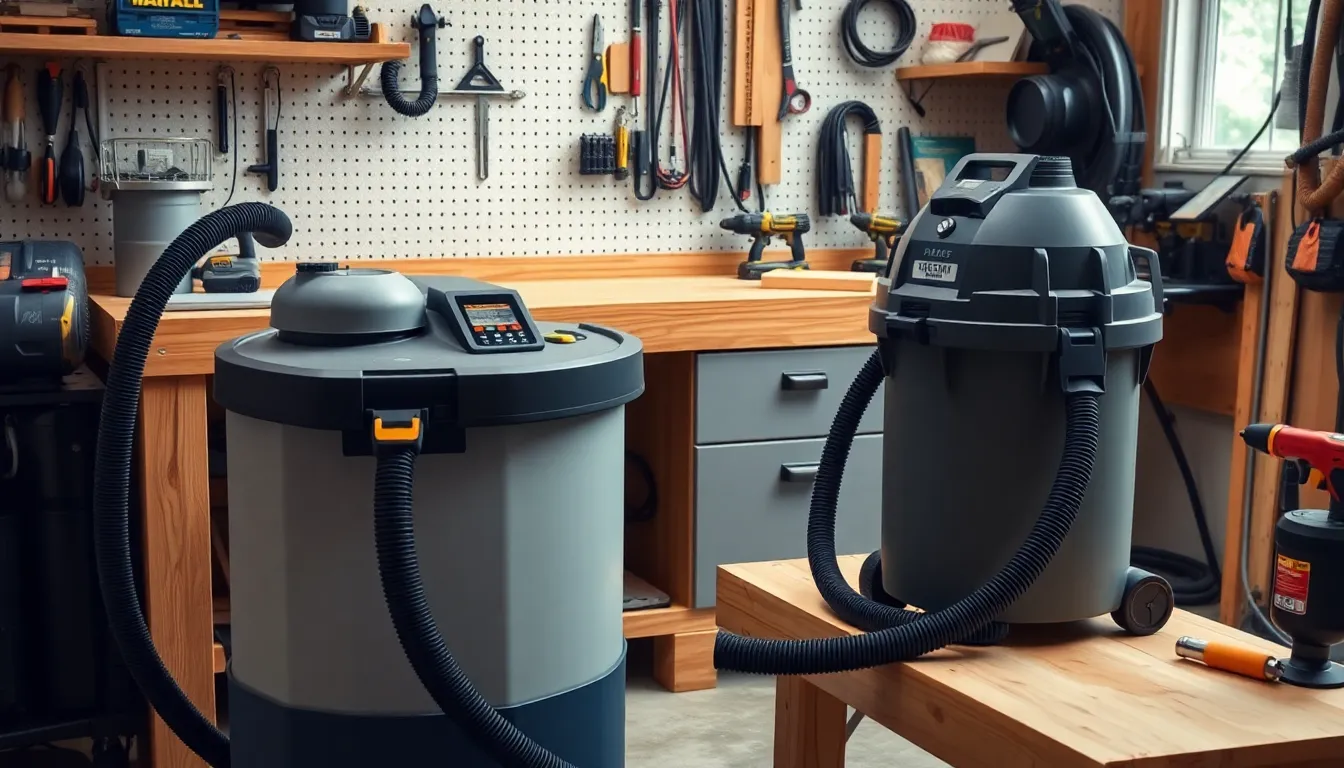
Why Dust Collection is Essential for Small Woodshops
Hey there, fellow woodworker! If you're setting up a small woodshop in your garage or shed, dust collection for small woodshops should be at the top of your priority list. Woodworking produces fine dust particles that can linger in tight spaces, posing health risks like respiratory issues and even fire hazards from combustible dust buildup.
In a one-car garage or shed, space is premium. Dust doesn't just make a mess—it clogs tools, dulls blades, and reduces visibility. Without proper dust collection, your cozy workshop turns into a hazy health hazard fast.
The good news? You don't need a massive industrial setup. Beginner-friendly options exist that fit tight budgets and spaces while keeping your air clean.
Challenges of Dust in Tight Spaces
Small woodshops face unique dust woes. Garages and sheds often lack ventilation, trapping particles indoors.
Fine dust from sanders and saws sneaks into lungs and machinery. Coarse chips pile up, eating storage space.
Poor airflow means dust resettles quickly, creating slip hazards and tool wear.
Health impacts hit beginners hardest—coughs, allergies, long-term lung damage. Fire risk rises with layered dust on surfaces.
Noise and portability matter too; bulky systems overwhelm small areas.
Overcoming this starts with understanding your needs: tool types, cutting volume, and space constraints.
Key Features to Look for in Dust Collectors
Before buying, focus on these must-haves for dust collection for small woodshops.
First, airflow rating in CFM (cubic feet per minute). Aim for 350+ CFM for basic tools, higher for saws.
Static pressure (SP) measures suction power—look for 6-10 inches of water lift to handle long hoses.
Filter efficiency: HEPA or 1-micron bags capture fine dust best.
Portability: Wheels, compact size under 20 inches wide for sheds.
Noise level under 80 dB keeps neighbors happy.
Hose compatibility: 2-4 inch diameters, quick-connect fittings.
Budget under $500? Prioritize single-stage collectors with cyclone separators for chip separation.
Durability: Metal impellers over plastic for longevity.
These features ensure scalability—start small, expand later.
Essential Beginner Tools: Shop Vacs and Portables
New to woodworking? Begin with shop vacs. They're affordable, under $100 often, and versatile for small woodshops.
Shop vacs offer 100-200 CFM suction, perfect for hand tools and light sanding. Add a dust deputy cyclone separator (under $50) to trap 99% of chips, extending filter life.
Portability reigns: Roll them anywhere in your shed.
Trade-offs? Limited power for stationary tools. Noise can be loud.
Next step up: Portable dust collectors. Single-stage units (5-10 gallon) under $300 provide 400-600 CFM.
Compact, with 4-inch inlets, they fit garage corners.
Ideal starters: Pair with blast gates for multi-tool use.
Building a Full Dust Collection System on a Budget
Dreaming of a full system without breaking the bank? Under $500 setups exist for one-car garages.
Core: 1-2 HP portable collector (around $250-400) as central hub.
Add 4-inch PVC pipes along walls—cheap at hardware stores.
Budget breakdown:
| Component | Estimated Cost | Purpose |
|---|---|---|
| Portable Collector (1 HP) | $250-350 | Main suction |
| Cyclone Separator Add-On | $40-60 | Chip separation |
| 25 ft 4" PVC Pipe & Fittings | $50 | Ducting |
| Blast Gates (4-pack) | $40 | Tool switching |
| Hoses & Clamps | $30 | Connections |
| Total | Under $500 | Full basic system |
Install ducting overhead or wall-mounted to save floor space.
Scalability: Add remote switches later for convenience.
This setup handles table saws to sanders in tight spots.
DIY Hacks for Better Suction and Performance
Boost what you have without spending much. DIY shines in small woodshops.
Hack 1: Homemade cyclone from 5-gallon buckets. Stack two, add inlet/outlet—99% chip separation for $20.
Hack 2: Seal leaks with foil tape on all joints. Gains 20-30% suction.
Hack 3: Long-radius bends in PVC ducts reduce airflow loss—avoid 90-degree elbows.
Hack 4: Throat insert for table saws: 4x4 plywood box with hose port, custom-fit.
Hack 5: Sanding station hood: Plywood enclosure over bench with downdraft holes.
Hack 6: Foot pedal valve for shop vacs—hands-free control.
Safety first: Ground all metal parts, avoid flammable materials.
These hacks make budget gear punch above weight.
Tool-Specific Dust Collection Add-Ons
Tailor collection to your tools for max efficiency.
Table saws: Over-arm hoods or blade guards with 4-inch ports capture 80% dust. DIY: Plywood splitter with hose.
Band saws: Throat plates with ports, plus lower blade guards.
Sanders: Orbital models need hoods or snap-on collectors. Build a downdraft table from pegboard over a box.
Routers: Table-mounted fence ports or above-table hoods.
Miter saws: Universal hoods clip on, hose to collector.
Drum sanders: Enclosed cabinets with exhaust ports.
Pro tip: Use flex hoses for portability, rigid for stationary.
Match port sizes: 2.5" for sanders, 4" for saws.
Maintenance Tips to Keep Your System Running Smooth
Neglect kills dust collectors. Routine care extends life.
Weekly: Empty collection bags/drums outside.
Monthly: Shake or vacuum filters. Replace HEPA yearly.
Check hoses for clogs—snake with compressed air.
Lubricate wheels, tighten fittings.
Clean impeller annually—unplug first!
Monitor gauges: Drop in CFM signals issues.
Store in dry areas to prevent rust.
For small spaces, collapsible bags save room.
Log maintenance—catches problems early.
Trade-Offs: Budget, Mid-Range, and Premium Options
Budget (<$500): Shop vacs/portables. Pros: Cheap, portable. Cons: Lower CFM, frequent emptying, noisier.
Mid-range ($500-1500): 2 HP single-stage with cyclones. Pros: Better filters, quieter, scalable. Cons: Bulkier, needs ducting.
Premium (>$1500): Two-stage with HEPA, auto-clean filters. Pros: Shop-grade air, low maintenance. Cons: Space hog, overkill for sheds.
For small woodshops, mid-range hits sweet spot—future-proof without overwhelm.
Weigh your volume: Hobby? Budget. Frequent use? Upgrade.
Common Mistakes Buyers Make
Beginners trip up often—avoid these.
Mistake 1: Ignoring static pressure—high CFM but weak suction fails on hoses.
Mistake 2: Undersized hoses (under 4") choke flow.
Mistake 3: Skipping blast gates—whole system loses power.
Mistake 4: Poor duct layout—too many bends drop efficiency 50%.
Mistake 5: Cheap plastic impellers break on knots.
Mistake 6: No cyclone—filters clog in hours.
Mistake 7: Overlooking noise/vibration in sheds.
Mistake 8: Buying too big—blocks garage door.
Research CFM charts per tool.
Decision Framework: Choosing Your Dust Collection Solution
Ready to pick? Follow this step-by-step.
Step 1: List tools and daily use. Saws heavy? Need 500+ CFM.
Step 2: Measure space. Max footprint? Go portable.
Step 3: Set budget. Under $500? Vac + cyclone.
Step 4: Prioritize features. HEPA for health, wheels for mobility.
Step 5: Plan scalability. Modular ducts allow growth.
Step 6: Test airflow post-install. Use smoke test or anemometer app.
Quick quiz:
-
Occasional hobby: Shop vac setup.
-
Weekend warrior: Budget portable system.
-
Daily user: Mid-range full install.
Start small, upgrade as skills grow. Your lungs and shop will thank you!
There you have it—a scalable path to clean air in your small woodshop. Happy woodworking!